August 3, 2026
Rural, regional and remote Queensland women continue to demonstrate leadership and optimism despite facing increasing challenges with essential services, digital access and disaster impacts, according to the Queensland Rural, Regional, Remote Women 2026 Report, out today.
The 2026 research captures the experiences of hundreds of women from across Queensland and provides one of the state’s most comprehensive snapshots of women’s lives outside metropolitan centres.
The report tracks changing conditions across employment, digital access, volunteering, community services, leadership, disaster resilience, climate and energy, social connection and future opportunities.
Queensland Rural, Regional and Remote Women’s Network Board Member Casey Alsop said the report illustrated both the strength of regional communities and the growing complexity of the challenges they face.
“Regional Queensland women continue to show extraordinary adaptability and leadership. They’re building careers across multiple industries, leading their communities and volunteering countless hours, all while navigating increasing pressure from service shortages, digital barriers and the impacts of natural disasters,” Ms Alsop said.
The report found women are increasingly working across multiple industries and hybrid careers, with stronger representation of younger women in leadership and professional roles. At the same time, women reported persistent challenges accessing healthcare, childcare and everyday essentials, with grocery availability showing the greatest decline since 2025.
Digital technology emerged as both an opportunity and a challenge. While women are relying more heavily on digital platforms for business, employment, community connection and everyday life, many continue to face accessibility barriers.
The report also demonstrates the significant contribution women make through volunteering, with around one in four respondents contributing between 10 and 20 hours each week to their communities.
Weather-related supply chain disruptions are the most common disaster impact, highlighting the ongoing vulnerability of rural and remote communities to infrastructure disruption and economic uncertainty.
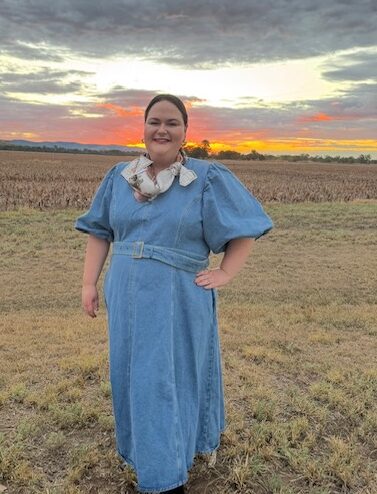
RRR Women member Tahnee Odorico, from Toowoomba (pictured top), said women in her community and work were often at the forefront of how families, businesses and communities respond to disasters.
“Supply chain disruptions either caused by severe weather to global geopolitical events can have an amplified impact across regional, rural and remote Australia,” Ms Odorico said.
“Having experienced these challenges firsthand and supported clients through this impact, I understand the importance of ensuring regional women’s voices are heard.”
Women reported increasing influence in decision-making, for example in areas like investment and energy, with close to 65 per cent identifying mentoring and skills development as the most important way to strengthen women’s voices in community leadership.
“Through its advocacy, networks and resources, RRR Women helps strengthen the capacity of women to navigate disruption, build resilience and support those around them,” Ms Odorico said.
“In doing so, RRR Women not only empowers regional women but also contributes to stronger communities, healthier local economies and networks and therefore more resilient supply chains.”
Key findings:
- The evolving nature of multi-generational leadership and regional diversification: More women work in multiple industries, consulting roles or hybrid careers while there is increasing representation from younger women in leadership and professional roles.
- The gap between digital reliance and digital access: Social media and digital services are increasingly being used not only socially, but professionally and strategically but there is a persistent gap between reliance on digital platforms and actual accessibility.
- The hidden volunteer economy: About a quarter of women volunteer between 10 and 20 hours a week.
- Persistent challenges in service accessibility: Technology and digital services showed the strongest improvement, despite a persistent gap in access, while general grocery items experienced the largest decline and health and childcare were consistently weak year on year.
- Supply chain disruptions are the most common disaster impact: Weather continues to have a profound impact on rural, regional and remote women through infrastructure disruption, supply chain impacts and economic insecurity.
- Women are increasingly influencing decision making in areas like investment and energy: Close to 65% of respondents said mentoring and skills development programs would be the most significant contributor to women in their community having a stronger voice in decision-making.
- Value of social connectivity for support: Social connection, belonging and purpose appeared consistently throughout qualitative responses and represented one of the strongest recurring themes in the 2026 survey.
About RRR Women
Queensland Rural, Regional and Remote Women’s Network (RRR Women) connects, empowers, and supports women living and working in rural, regional, and remote areas of Queensland. Our purpose is to foster personal and professional growth, leadership, and community engagement among women, while advocating for issues that matter to them. Founded in 1993, we are an independent membership charity.